
Releasing music today is easier than ever, but getting a song onto major streaming platforms still involves more than uploading an audio file.
For independent artists, understanding how music distribution works can make the release process smoother, reduce avoidable mistakes, and help build a catalog that is easier to manage over time.
This guide explains the basics of digital music distribution, what a distributor does, what you need before releasing your music, and what happens after your release goes live.
What Is Music Distribution?
Music distribution is the process of delivering music from an artist or label to digital music platforms.
These platforms may include streaming services, digital stores, social platforms, and other services that make music available to listeners.
In most cases, independent artists do not upload directly to every platform one by one. Instead, they use a music distributor that delivers the release and its metadata to supported services.
A distributor acts as the connection between your music catalog and the platforms where people listen to music.
What Does a Music Distributor Do?
A digital music distributor typically helps artists and labels manage the technical side of releasing music.
Depending on the service, this may include:
- Delivering releases to supported streaming platforms and digital stores
- Sending release metadata
- Assigning or accepting ISRC and UPC codes
- Scheduling release dates
- Managing artist and catalog information
- Collecting and reporting royalties
- Processing release updates or takedown requests
- Supporting services such as Content ID or UGC monetization for eligible music
The exact features and eligibility requirements vary between distributors and platforms.
How Does Music Get From an Artist to Spotify and Other Platforms?
The process usually starts with the artist preparing a finished release.
You provide the distributor with the audio, artwork, metadata, credits, release information, and other required details.
The distributor reviews the submission and delivers the information to selected platforms.
A simplified release flow looks like this:
Artist or Label → Music Distributor → Streaming Platforms and Digital Stores → Listeners
Once the platforms receive and process the release, it can become available on the scheduled release date.
The distributor may then receive usage and royalty reports from the platforms and make those reports available to the artist or label.
What Do You Need Before Distributing Music?
Preparing everything before submission can help prevent delays.
1. Final Audio
Your master audio should be complete before distribution.
Avoid submitting unfinished versions if you are still planning major changes to the mix, arrangement, or master.
2. Cover Artwork
Your release needs artwork that meets the technical and content requirements of the distributor and supported platforms.
The artwork should match the release and avoid elements that could create copyright, trademark, or misleading-content issues.
3. Release Metadata
Metadata is the information attached to your release.
Common metadata includes:
- Artist name
- Release title
- Track title
- Featured artists
- Songwriters
- Producers
- Other contributors
- Genre
- Language
- Release date
- Label or imprint information
Accurate metadata is important because it helps platforms identify, organize, and display your music correctly.
What Are ISRC and UPC Codes?
Two identifiers you will often see during music distribution are ISRC and UPC.
ISRC
An ISRC, or International Standard Recording Code, identifies an individual sound recording.
A track generally keeps the same ISRC when the same recording is distributed again, while a materially different recording may require a different identifier.
UPC
A UPC is commonly used to identify the release as a product, such as a single, EP, or album.
An easy way to remember the difference is:
ISRC = individual recording
UPC = release
Your distributor may provide these codes or allow you to submit existing ones, depending on its workflow.
Why Release Dates Matter
A release date is more than the day your music becomes public.
Submitting early gives time for:
- Distribution review
- Metadata corrections
- Platform processing
- Artist profile mapping
- Pre-release promotion
- Pre-save campaigns
- Playlist pitching where available
Submitting at the last minute increases the risk that a release may not appear everywhere exactly when expected.
For an important release, build enough time into your schedule for review and possible corrections.
What Happens After You Submit a Release?
After submission, a distributor may review your release for technical and metadata requirements.
If something needs attention, you may be asked to correct it before delivery.
Once approved, the release is delivered to supported platforms.
Each platform has its own processing systems, so delivery does not always mean the release becomes visible instantly.
After the release is live, you should check:
- Artist profile placement
- Track and release titles
- Artwork
- Credits
- Release date
- Links on major platforms
If something is incorrect, contact your distributor or use its available release-management tools.
How Do Music Royalties Work?
When listeners stream, download, or otherwise use music in monetized environments, revenue may be generated.
Platforms report eligible usage and revenue through their own reporting cycles. A distributor then processes the reports and makes the corresponding royalty information available according to its terms.
Because reporting periods and payment schedules vary, royalties usually do not appear immediately after a stream happens.
Artists should keep clear records of their releases, collaborators, ownership information, and royalty agreements.
What Is YouTube Content ID?
YouTube Content ID is a system that can identify eligible copyrighted audio used in videos on YouTube.
For eligible music, rights holders may be able to monetize or manage certain uses of their recordings.
Not every release qualifies for Content ID. Music containing certain non-exclusive, licensed, public-domain, or otherwise ineligible material may be restricted depending on the applicable rules and service requirements.
Always check the eligibility requirements before enrolling a release.
What Is UGC Monetization?
UGC stands for user-generated content.
On supported platforms, eligible music used in videos or other user-created content may generate revenue for rights holders.
UGC monetization can be valuable for artists whose music is frequently used in short-form video, creator content, and social media.
As with Content ID, eligibility and availability depend on the music, platform, territory, distributor, and applicable rights.
Should Independent Artists Use a Music Distributor?
For most independent artists who want their music available across multiple major platforms, a distributor is usually the practical option.
Instead of managing separate delivery relationships with many services, artists can manage releases through one distribution workflow.
When choosing a distributor, consider more than price.
Look at factors such as:
- Supported platforms
- Release limits
- Artist limits
- Royalty model
- Content ID and UGC options
- Catalog management
- Analytics and reporting
- Support
- Takedown process
- Rights and ownership terms
- Payment methods
- Long-term catalog costs
The best distributor is the one that fits the way you plan to release and manage your music.
Common Music Distribution Mistakes
Independent artists can avoid many release problems by planning ahead.
Common mistakes include:
- Uploading incorrect metadata
- Using inconsistent artist names
- Submitting the wrong audio master
- Uploading artwork that does not meet requirements
- Choosing a release date that is too close
- Sending music to the wrong artist profile
- Reusing identifiers incorrectly
- Forgetting contributor credits
- Not understanding Content ID eligibility
- Ignoring the distributor’s terms and royalty structure
A few extra minutes spent reviewing a release before submission can save a lot of time later.
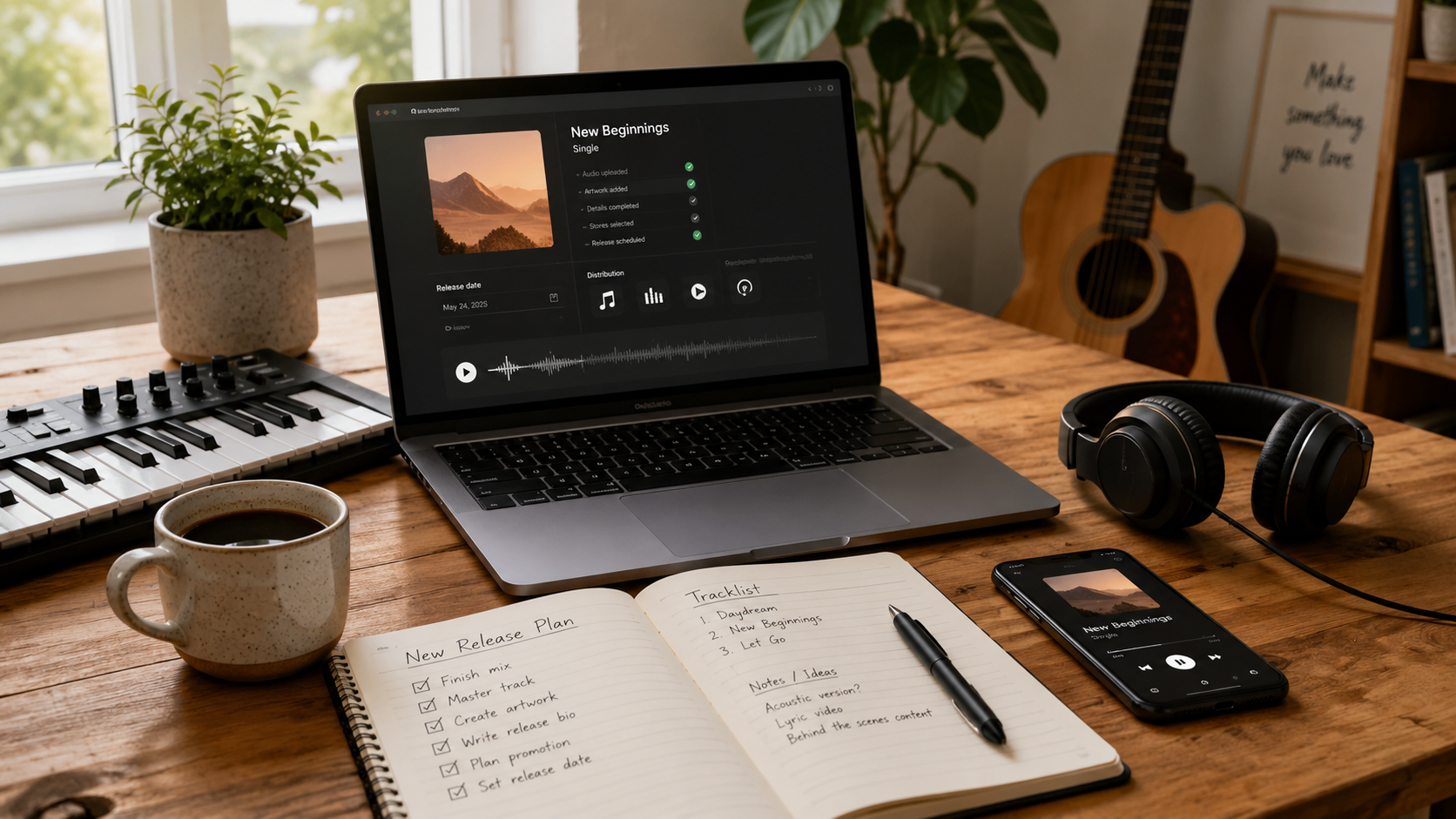
A Simple Release Checklist
Before submitting your next release, make sure you have:
- Final mastered audio
- Final cover artwork
- Correct artist and track names
- Complete songwriter and contributor credits
- Release date
- Genre and language information
- Existing ISRC or UPC codes, if applicable
- Rights and ownership information
- A promotion plan
- Enough time before release day
Final Thoughts
Music distribution is not just about getting a song onto Spotify.
It is the system that connects your finished music, metadata, rights information, digital platforms, royalty reporting, and long-term catalog management.
Understanding that process gives independent artists more control over their releases and helps avoid problems as their catalog grows.
If you are preparing your first release, start with the basics: finish the music, organize your metadata, confirm your rights, choose a realistic release date, and use a distribution service that matches your needs.